
Blog
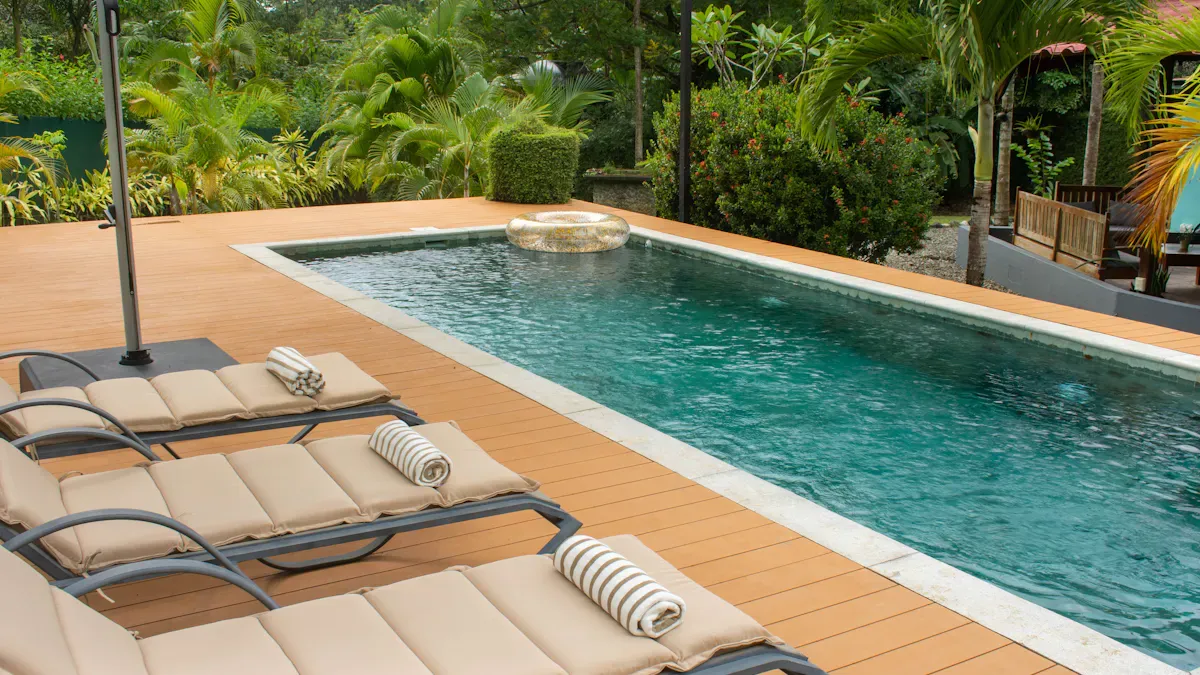
Choosing composite decking around pool areas in 2026 means focusing on safety, durability, and easy care. Modern materials resist slips, moisture, and fading, which keeps the area safe and looking new. Many new options reflect heat and offer cool, comfortable surfaces. Homeowners find that composite decking around pool spaces combines style and long-term value. Always balance function with design for the best results.
Key Takeaways
- Prioritize safety by choosing composite decking with slip-resistant textures to prevent accidents around the pool.
- Select durable, moisture-resistant composite materials that can withstand constant exposure to water and sunlight.
- Opt for low-maintenance options that require only occasional cleaning, saving time and effort in upkeep.
- Consider aesthetics and value; modern composite decking comes in various colors and styles that enhance your property’s appeal.
- Check for warranties and long-lasting performance to ensure your investment in composite decking pays off over time.
Key Criteria for Composite Decking Around Pool
Safety and Slip Resistance
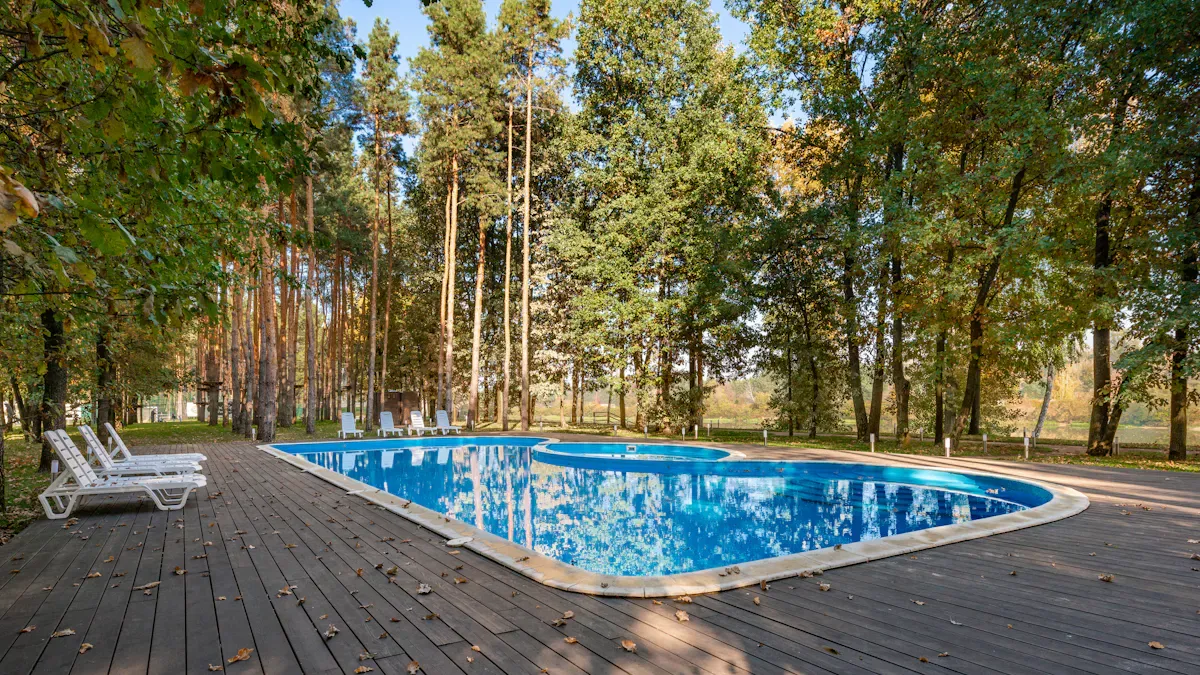
Safety is the top priority for any composite pool deck. Wet surfaces increase the risk of slips and falls, especially when people walk barefoot. Manufacturers design composite decking around pool areas with slip-resistant textures to reduce accidents. Many products meet international slip resistance standards, such as DIN 51097 B or C for barefoot areas near pools. These ratings ensure a secure grip even when the deck is wet.
| Safety Concern | Description |
|---|---|
| Sharp Edges | Poorly made decking can have sharp edges, splinters, or loose boards that can be dangerous. |
| Slip Resistance | Many composite decking products are designed to be slip-resistant, reducing the risk of slips. |
| Uneven or Worn Decking | Cracks, splinters, and warping create tripping hazards, necessitating regular maintenance. |
Tip: Choose boards with textured surfaces and rounded edges to prevent injuries and provide a comfortable walking experience.
Durability and Moisture Resistance
Composite decking around pool areas must withstand constant exposure to water and sunlight. The best composite decking uses a blend of recycled plastics and wood fibers, capped with a polymer layer. This structure makes the boards non-porous, so they resist moisture, rot, and insects. Unlike timber, composite pool deck boards do not absorb water, which prevents warping and decay.
| Feature | Composite Decking | Timber Decking |
|---|---|---|
| Moisture Resistance | Excellent; non-porous | Varies; absorbs water |
| Maintenance | Low; soap and water | High; sealing, staining |
Composite pool deck boards last between 25 and 35 years in wet environments. Some brands offer warranties up to 50 years, making them the best material for pool deck longevity.
Maintenance Needs
Homeowners prefer materials that require minimal upkeep. Composite decking around pool areas needs only occasional rinsing and sweeping to keep it clean. Stains should be wiped off quickly to prevent permanent marks. Unlike wood, composite pool deck boards do not need sanding, sealing, or painting.
- Cost Range: $55–$65 per square foot installed
- Maintenance Cost: Very low, usually just occasional rinsing
- Regular cleaning with soapy water and a soft brush prevents dirt build-up
- Surface stains are harder to remove, so spills should be cleaned promptly
- Protection from sunlight helps prevent bending or buckling
Note: Regular maintenance keeps your deck looking new and extends its lifespan.
Aesthetics and Value
A composite pool deck adds beauty and value to your property. Modern boards come in a wide range of colors and textures, such as driftwood gray, warm red-brown, golden neutrals, and grounded gray. These options suit both modern and traditional home styles. The stable surface resists moisture damage, warping, and splintering, maintaining its appearance through temperature changes.
- Investing in durable materials like composite decking around pool areas increases your home’s value and appeal.
- A well-designed poolside area with composite decking can significantly boost curb appeal.
- Reduced maintenance and longer lifespan translate into long-term savings.
- A modern, low-maintenance deck is a desirable feature in a competitive real estate market.
Callout: Choosing the best composite decking ensures your pool area remains attractive, safe, and valuable for years.
Why Choose a Composite Pool Deck
Benefits Over Wood and PVC
A composite pool deck offers several advantages compared to wood and PVC. Homeowners often choose this material for its natural look and comfortable feel. Composite boards contain wood fibers, which help them blend with outdoor spaces. These fibers also help keep the surface cooler on hot days, making it pleasant for bare feet.
- Composite pool deck boards have a strong polymer shell. This shell blocks water from entering the core, so the boards resist swelling and warping.
- The surface of a composite pool deck is slip-resistant. This feature helps prevent accidents near the water.
- Composite decking around pool areas can last up to 30 years with proper care. It stands up to heavy use, scratches, and even pets.
- Many people prefer composite over wood or PVC because it looks more like real wood and feels better underfoot.
When comparing costs, composite decking materials range from $4.50 to $13.00 per square foot. Installation adds $9 to $15 per square foot. While pressure-treated wood may cost less at first, composite lasts longer and needs less upkeep. Over time, this makes composite the best decking material for pool areas.
Eco-Friendly and Low Maintenance
A composite pool deck supports eco-friendly choices. Many brands use recycled plastics and wood fibers, which reduces waste. This makes composite a smart option for people who care about the environment.
- Composite pool decks do not need staining, sealing, or painting. Simple cleaning with soap and water keeps them looking new.
- The boards resist mold, rot, and insects. This means less worry and more time for low-maintenance poolside living.
- Choosing composite helps protect forests, since fewer trees are cut down for decking.
Tip: A composite pool deck combines beauty, safety, and easy care. It creates a space where families can relax and enjoy the outdoors.
Essential Features of the Best Composite Decking
Water and Slip Resistance
Water and slip resistance are critical for any composite pool deck. Poolside areas stay wet most of the time, so the surface must prevent slips and accidents. The best material for pool deck use is fully capped composite decking. These boards have a moisture-resistant polymer shell that seals all sides. This feature stops water from soaking in and prevents swelling or mold. Boards with a slip-resistance rating of R11 or higher offer extra safety for barefoot traffic. Textured finishes and embossed surfaces improve grip. Grooved boards help water drain away quickly.
| Feature | Description |
|---|---|
| Fully Capped | Boards sealed on all sides with a moisture-resistant shell to prevent water absorption. |
| Slip-Resistance Rating | Certified rating of R11 or higher for safety in wet barefoot areas. |
| Textured Finishes | Embossed surfaces enhance grip and safety; grooved boards aid in water drainage. |
| Moisture Barrier | Capped boards protect against UV rays, water, chlorine, and algae. |
| Heat Retention | Lighter colors or thermally modified boards avoid excessive heat retention. |
Tip: Always check for slip-resistance ratings and textured surfaces when selecting composite decking around pool areas.
UV and Heat Reflection
Sunlight can cause fading and make deck surfaces hot. Leading brands design composite pool deck boards with UV inhibitors. These materials keep colors bright and prevent fading. Light-colored boards reflect heat and stay cooler underfoot. This feature is important for families who spend time outdoors. Boards engineered for durability and low maintenance work well in pool areas. UV protection helps the deck last longer and keeps it looking new.
- Light-colored boards reflect heat and stay cooler.
- UV inhibitors prevent fading and maintain color.
- Durable materials require less maintenance.
Note: Choosing boards with UV protection and heat reflection ensures comfort and longevity for your poolside space.
Surface Texture and Comfort
Comfort matters when people walk barefoot on a composite pool deck. Surface texture affects both safety and feel. Non-slip textures reduce the risk of slipping. Composite decking mimics wood and comes in many color options. It resists moisture and insects, making it practical for poolside use. Boards with added grip features or embossed surfaces provide extra comfort and safety.
| Material | Slip Resistance | Comfort (Barefoot) | Key Safety Notes |
|---|---|---|---|
| Composite Decking | Moderate | Can get warm | Needs added grip features/texture |
- Composite decking offers non-slip textures.
- It resists moisture and insects.
- It provides low maintenance and durability.
Callout: Surface texture and comfort make a composite pool deck a safe and enjoyable place for everyone.
Comparing Top Brands and Types in 2026
Capped Polymer vs. Wood Composite
Choosing the right material for a composite pool deck starts with understanding the difference between capped polymer and wood composite decking. Capped polymer boards are completely waterproof. They do not absorb moisture, which makes them ideal for wet pool areas. Wood composite decking resists moisture but is not fully waterproof. Capped polymer requires less maintenance and holds color longer under sunlight. Wood composite boards offer realistic wood grain textures and a warmer feel. The table below highlights the main differences:
| Feature | Capped Polymer Decking | Wood Composite Decking |
|---|---|---|
| Moisture Resistance | Completely waterproof, does not absorb moisture | Moisture-resistant but not waterproof |
| Maintenance Requirements | Lower maintenance, non-porous surface | Requires more cleaning over time |
| UV and Fade Resistance | Superior long-term color retention | Performance varies, lower-end may fade quickly |
| Impact Resistance | Lighter but engineered for strength | Denser, slightly higher impact |
| Aesthetic Appeal | Reflects more heat, remains cooler | Realistic wood grain, warmer feel |
Note: For wet climates, capped polymer or fully capped composite pool deck boards are the safest choice.
Solid Core vs. Hollow Boards
Solid core boards have an impermeable barrier. They resist moisture, rot, and insects, making them perfect for high-moisture environments like pool decks. Hollow boards are lighter and moisture-resistant but may not last as long with constant water exposure. Solid core boards can be installed in ground contact or even underwater without losing strength. Four-sided capping gives maximum protection against mold and moisture, while three-sided capping is less expensive but leaves the underside exposed.
- Solid core boards are best for composite pool deck installations near water.
- Hollow boards work for dry areas but are not recommended for wet climates.
Brand Highlights for Pool Decks
Many brands offer advanced features for poolside use. The table below summarizes standout features:
| Brand | Standout Features |
|---|---|
| TimberTech | Rich color options, realistic woodgrain, moisture and stain resistance. |
| AZEK Collection | Premium PVC, fade- and stain-resistant, ideal for poolside decks. |
| MoistureShield | CoolDeck® technology reduces heat absorption by up to 35%, comfortable in hot weather. |
| Deckorators | Mineral-Based Composite, minimal thermal expansion, 50-year structural warranty. |
| Trex | Reliable performance, excellent value, warranties up to 50 years. |
PVC and capped composite pool deck boards handle extreme weather and heavy precipitation. TimberTech Advanced PVC and AZEK are highly recommended for wet climates because they do not absorb moisture. MoistureShield’s solid core boards resist rot and can be installed in wet conditions, including marinas and docks. Deckorators and Trex also provide long-term durability and value.
Tip: For the best composite decking around pools, avoid wood-based composites in wet climates. Choose capped polymer or mineral-based boards for safety and longevity.
Quick Comparison Table: Best Composite Decking Options
When choosing the best composite decking for pool areas, it helps to compare top brands side by side. Each brand offers unique features that affect safety, comfort, and long-term value.
Key factors to compare:
- Durability for poolside conditions
- Slip resistance for wet areas
- Moisture resistance to prevent damage
- UV resistance to protect against fading
- Maintenance requirements for easy care
- Aesthetic appeal to enhance your pool area
The table below summarizes how leading brands perform in these important areas:
| Brand | Slip Resistance | Heat Reflection | Warranty Description | Notable Features | Suitability for Pools |
|---|---|---|---|---|---|
| MoistureShield | Textured surface for safety | Good, especially with CoolDeck® | 50-year structural (select lines) | CoolDeck® tech, installs in wet conditions | Excellent |
| Trex Transcend | Textured surface for safety | Good with lighter colors | 50-year limited fade & stain warranty | Reliable, many color options | Excellent |
| Deckorators Voyage | High slip resistance | Good | 50-year structural guarantee | Mineral-based, minimal expansion | Excellent |
| TimberTech AZEK Harvest | High slip resistance | Very good, light colors stay cooler | 50-year limited fade & stain warranty | Premium PVC, realistic wood look | Excellent |
| Fiberon Concordia | Good slip resistance | Good | Lifetime performance, 50-year fade & stain warranty | Durable, eco-friendly materials | Very Good |
| WearDeck | High slip resistance | Excellent, stays cool | Limited lifetime warranty | Fiberglass reinforced, strong and stable | Excellent |
Most of these brands offer excellent slip resistance, which is critical for safety around pools. Many use advanced technology to keep surfaces cool and comfortable. Warranties range from 50 years to lifetime coverage, showing confidence in long-term performance. Boards with high moisture resistance and UV protection maintain their appearance and strength for many years.
Selecting the best composite decking means looking at all these factors together. This approach helps you create a safe, attractive, and low-maintenance poolside space.
Practical Tips for Installing Composite Decking Around Pool
Climate and Color Choices
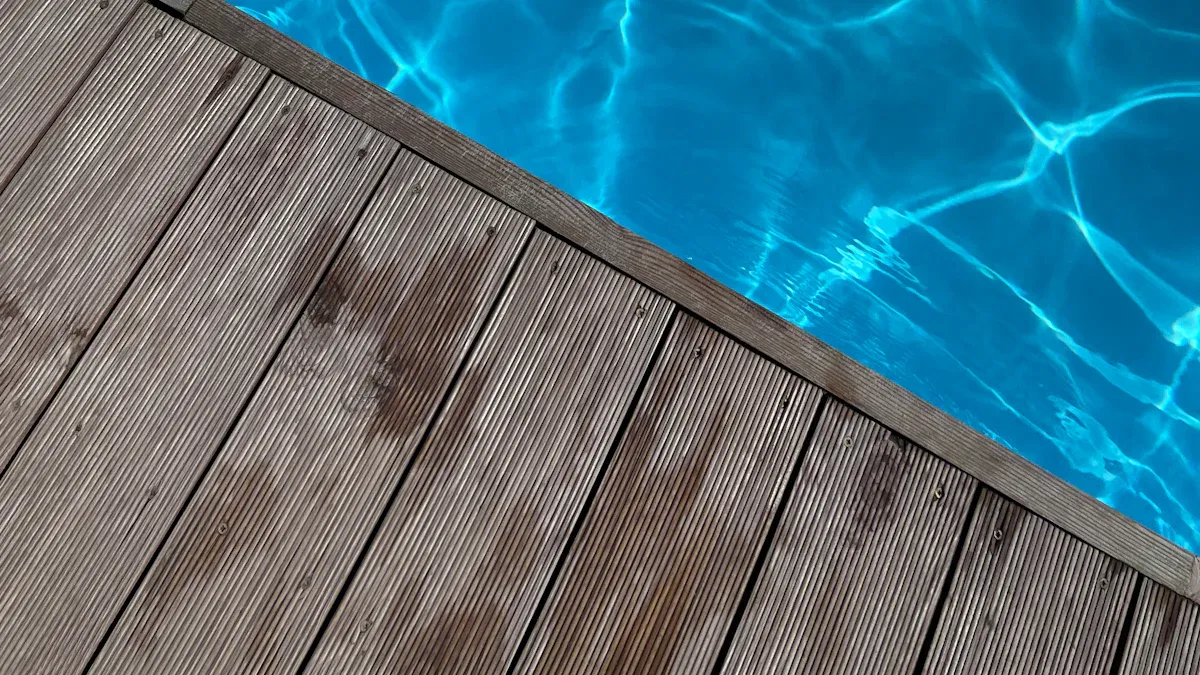
Climate plays a big role in choosing the right composite decking for your pool area. In hot regions, lighter colors reflect sunlight and keep the surface cooler. Darker boards absorb more heat, which can make them uncomfortable for bare feet. Humid or rainy climates require boards with strong moisture resistance to prevent rot and warping. UV-resistant materials help protect against sun damage and fading. For areas with snow or ice, select decking that stays safe and slip-resistant even in cold weather.
| Climate Factor | Consideration |
|---|---|
| Heat Retention | Lighter colors reflect heat, keeping decks cooler in hot climates. |
| Moisture Resistance | Essential for humid or rainy areas to prevent rot and swelling. |
| Surface Temperature | Lighter shades or added shade reduce heat absorption. |
Tip: Always match your deck color and material to your local weather for the best comfort and durability.
Board Size and Layout
Proper board size and layout improve both safety and appearance. For straight decking, use joist spacing of 16 inches on-center. Diagonal patterns need closer spacing, about 12 inches on-center, to support the boards. Some reinforced brands allow wider spacing, up to 24 inches. Good spacing prevents warping and ice buildup. Always follow the manufacturer’s instructions for best results. A slight slope away from the pool and house helps water drain, reducing slippery spots and puddles.
- A well-designed layout boosts safety and looks.
- Proper drainage keeps the deck dry and safe for walking.
Installation and Maintenance Tips
Good installation and care keep your deck looking new. Sweep away debris and wash with mild soap regularly. Clean spills quickly to avoid stains. Inspect the deck each season for loose fasteners or damage. Use protective pads under furniture to prevent scratches. Make sure water drains well to stop puddles from forming. Apply a protective finish every one to two years if recommended by the manufacturer.
- Regular cleaning and inspections extend deck life.
- Manage moisture and protect surfaces for best results.
Callout: Simple maintenance routines help your composite pool deck stay safe, beautiful, and long-lasting.
Selecting the right composite decking for your pool area means focusing on safety, durability, and visual appeal. Use the comparison table and practical tips to weigh your options. Review slip resistance, moisture protection, and warranty details before making a decision. For expert advice, consult a decking professional or visit a local showroom.
Tip: A well-chosen composite deck creates a safe, beautiful, and lasting poolside retreat.
FAQ
What makes composite decking safer than wood around pools?
Composite decking has slip-resistant surfaces and no splinters. The boards stay smooth and stable, even when wet. Many brands test their products for safety near water. This helps prevent slips and injuries.
How often should I clean my composite pool deck?
Clean your deck every one to two weeks during pool season. Use a soft brush and mild soap. Rinse with water. Quick cleaning removes dirt and prevents stains.
Can composite decking handle saltwater pools?
Yes, most composite decking resists salt and pool chemicals. The capped surface blocks moisture and prevents damage. Always check the manufacturer’s guidelines for best results.
Will composite decking fade in the sun?
Most modern composite boards have UV protection. This keeps colors bright and prevents fading. Lighter colors reflect more sunlight and stay cooler.
Is composite decking eco-friendly?
Many brands use recycled plastics and wood fibers. This reduces waste and saves trees. Composite decking offers a sustainable choice for pool areas.